

Sustainability Interoperability Layer for Operations (SILO)
A standardized, vendor-neutral interoperability layer between data center infrastructure and software platforms.
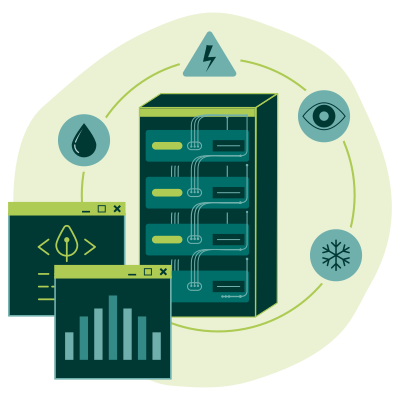
Building on the Green Software Foundation's WDPC standard, SILO defines a common framework for collecting, normalizing, and exchanging operational metrics across compute, power, cooling, networking, storage, and facility systems — enabling real-time sustainability optimization across traditionally siloed domains.
Developed with consensus from GSF member organizations













































Starting with an Assembly
SILO is in the proposal stage, which starts with a GSF Assembly — a structured, time-boxed process for bringing a group of experts to consensus on a hard question. The SILO Assembly brings together data center operators, infrastructure and platform vendors, and sustainability experts to define the requirements and scope for a common interoperability layer, before the work moves into a formal draft specification.

What is SILO?
SILO establishes a common framework for collecting, normalizing, and exchanging operational metrics across compute, power, cooling, networking, storage, and facility systems — providing a vendor-neutral foundation for real-time sustainability optimization.

Semantic Models
A vendor-neutral data model defining the meaning, relationships, and context of operational metrics — with common taxonomies, metadata, and engineering units for consistent interpretation.

APIs
Standardized interfaces for discovering, querying, and streaming operational data — supporting real-time and historical access while decoupling consumers from vendor implementations.

Interoperability Framework
Normalizes and translates data from diverse protocols and vendor systems into a common semantic format, validating incoming data for schema compliance, quality, and consistency.

Governance
Defines the processes for maintaining semantic models, approving new metrics, and managing specification evolution — with versioning aligned to WDPC governance.
Why SILO Matters
Standardized access to workload, power, thermal, fluid, environmental, and facility metrics supports use cases such as adaptive cooling, dynamic workload placement, energy efficiency optimization, predictive maintenance, heat reuse optimization, and automated sustainability reporting — enabling coordinated decision-making across traditionally siloed domains.
Industry Impact
By providing standardized data models, interfaces, and semantic definitions, SILO enables consistent visibility into the real-time state of both IT workloads and physical infrastructure. It serves as a vendor-neutral foundation for integrating telemetry from diverse hardware and software environments — letting data center operators, management platforms, and optimization engines consume and share information through a common interface.


Business Benefits

Adaptive Cooling coordinates thermal response to real-time workload and environmental signals
Dynamic Workload Placement routes compute to where power, cooling, and carbon conditions are most favourable

Predictive Maintenance surfaces early warning signals across facility and IT systems

Heat Reuse Optimization coordinates waste heat delivery to district heating and other reuse pathways

Automated Sustainability Reporting standardizes PUE, WUE, CUE, and emissions reporting across vendors
Environmental Impact
SILO supports standardized measurement and reporting of sustainability metrics including Power Usage Effectiveness (PUE), Water Usage Effectiveness (WUE), Carbon Usage Effectiveness (CUE), energy consumption, water consumption, and associated carbon emissions. Success is evaluated based on the availability, consistency, and interoperability of these metrics across participating systems — enabling organizations to quantify operational improvements and sustainability outcomes over time.


Complementing, WDPC
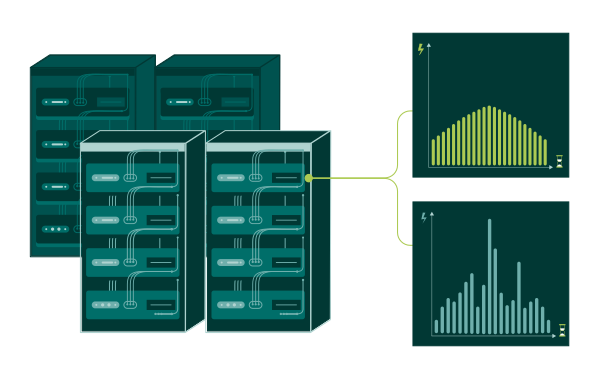
SILO complete the existing management protocols or telemetry systems, plugs into the existing WDPC Data Bus and defines a common semantic layer — providing semantic models, APIs, governance, and interoperability as a foundation for future interoperability across the data center ecosystem.
A New Architecture for Sustainability Data
Real-World Use Cases
Standardized, real-time access to operational data unlocks coordinated decision-making across compute, power, cooling, and facility systems.

Adaptive Cooling
Coordinate thermal response in real time based on workload, environmental, and facility signals.

Dynamic Workload Placement
Route compute to locations and times where power, cooling, and carbon conditions are most favourable.

Predictive Maintenance
Surface early warning signals by correlating operational data across facility and IT systems.

Automated Sustainability Reporting
Standardize PUE, WUE, CUE, and emissions reporting across vendors and infrastructure environments.
SILO Audience


Data Center Operators
SILO gives you standardized, real-time visibility across compute, power, cooling, and facility systems — enabling adaptive cooling, dynamic workload placement, and predictive maintenance without bespoke integrations per vendor.
Consistent metrics mean comparable data across your fleet.


Software & Platform Vendors
SILO's standardized APIs and semantic models let you build optimization engines and management platforms that work across heterogeneous infrastructure — without writing custom integrations for every vendor's telemetry format.
Build once against a common interface, deploy anywhere.


Sustainability Teams
SILO standardizes how PUE, WUE, CUE, energy, water, and carbon data flows through your infrastructure — giving you consistent, auditable metrics to track sustainability outcomes over time.
Reliable, comparable data is the foundation for credible reporting.
Journey to Transformation
Current focus: SILO is in the pre-draft stage — experts, operators, and sustainability practitioners are invited to help shape its scope and requirements.
-
Proposal
Requirements gathering from diverse stakeholders, defining scope and objectives, validating requirements.
-
Pre-Draft
Research and analysis, composing a preliminary technical specification draft.
-
Draft
Full specification with structured sections: introduction, scope, objectives, requirements, design, metrics, and compliance.
-
Consistency Review
Peer reviews, stakeholder feedback, and iterative refinement of the document.
-
WG Approval
Working group review, broader feedback incorporation, and formal sign-off.
-
SC Ratification
The Steering Committee officially approves the specification for public release.
-
Published
Public release, ongoing feedback, and maintenance. The standard is available for adoption.
Dive Deeper


Contribute to the Project
GSF Members OnlyWork on the SILO codebase — open issues, submit PRs, and collaborate on the specification.
View Repository →
Shape the Specification
GSF Members OnlyReview the SILO proposal and data models; propose changes and provide technical feedback.
Read Specification →
Hardware Standards WG
GSF Members OnlyJoin the working group overseeing SILO, WDPC, and other hardware sustainability standards.
Join Working Group →
Get Involved
SILO is a path toward standardized, real-time sustainability data. We need diverse perspectives to ensure this standard serves the entire ecosystem.


