
Green Software Foundation

Articles

News, insights, and technical deep-dives on green software from the GSF community.
Quote card with a headshot of Michael Koppmann: "We see security and sustainability as mutually reinforcing: both benefit from efficient, maintainable systems and deliberate engineering decisions. Applied together, these principles can support software that is more resource-efficient, reliable, and user-friendly." Attributed to Michael Koppmann, senior information security consultant at SBA Research. Green Software Foundation and SBA Research logos appear at the bottom.

Engineering Secure and Sustainable Software—Meet Michael Koppmann of SBA Research

GSF's new member shares how security, resilience, and sustainability can work together in software engineering and how SBA Research is applying these principles across the software lifecycle.
Read article →
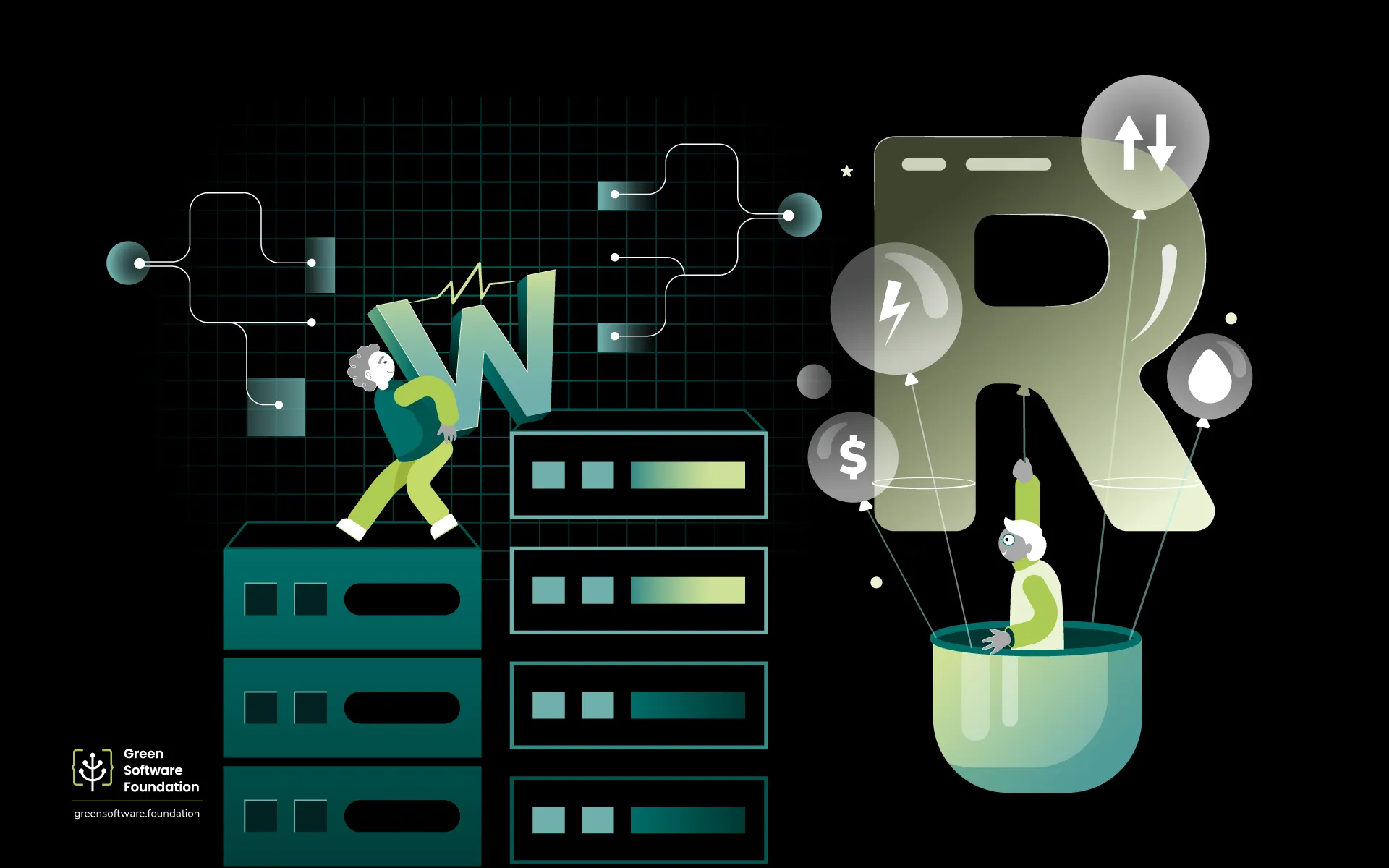
Illustration for "Beyond Watts: What Should AI Efficiency Really Measure?" showing a figure struggling to carry a large letter "W" (watts) across a row of server racks on the left, while on the right a smaller figure rides in a hot-air balloon basket lifted by a giant letter "R" (rate/functional unit), with balloons labeled with energy, cost, data-transfer, and water icons. Green Software Foundation logo in the bottom left.

Beyond Watts: What Should AI Efficiency Really Measure?

In our ED series, Navveen Balani argues AI efficiency should be measured by the value it delivers. He examines how GSF specifications such as SCI, SEI, and SWI use functional units to connect compute to the outcomes we care about.

Read article →
Green Software Foundation illustration: several people conversing near buildings, power lines, and a bar chart, with a large mechanical hand holding a compass beneath a glowing target/location icon — representing measurement, direction, and collaboration in sustainable software.

SCI for AI Bootcamp: How Four Organizations Are Measuring Their AI Emissions

This summer, Amadeus, AVEVA, Schneider Electric, and Siemens have joined GSF's first cohort to apply the SCI for AI methodology to their AI systems. We share what we've learned so far and what comes next.

Read article →
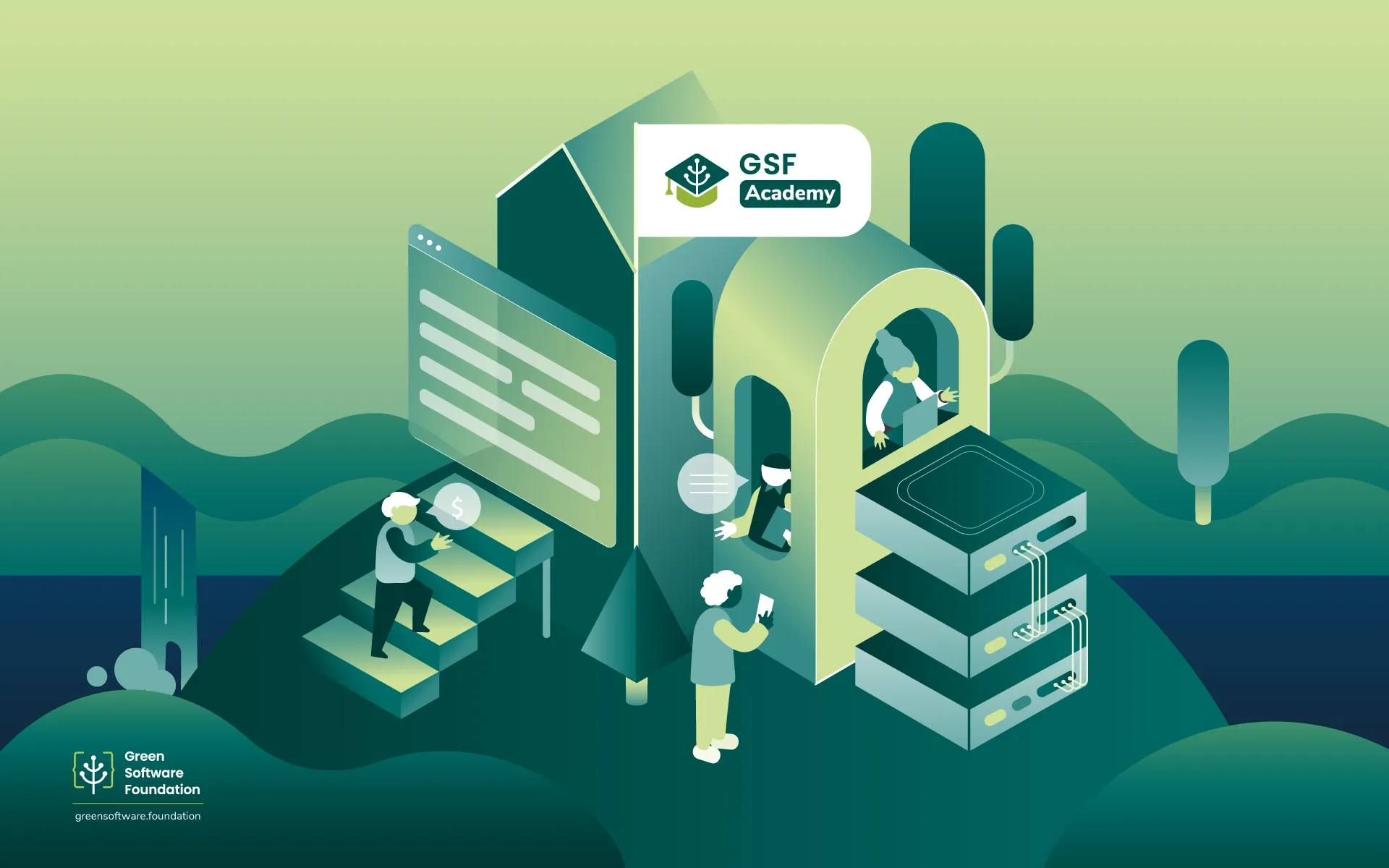
Isometric illustration of the GSF Academy, showing people building and assembling a structure with data servers, books, and tools — representing the Green Software Foundation's initiative to build sustainable AI skills and training.

Green Software Foundation Announces Intent to Launch Green Software & AI Academy to Build the Skills Needed for Sustainable AI

The GSF invites organizations to help build vendor-neutral training and credentials for sustainable AI, shaping the skills the industry needs.

Read article →
An illustrative workload-level dashboard bringing carbon, water, energy, cost, and hardware utilization into a single operational view.

One Ledger: When Sustainability and Business Value Become the Same Conversation

Drawing on his CleanEnviro Summit Catalyst 2026 keynote, Navveen Balani argues that, increasingly, reducing AI costs can also mean reducing its environmental impact.

Read article →
Illustration of two scientists at a lab bench experimenting with a GSF Labs browser window, alongside icons representing servers, security, data storage, and cloud computing, symbolizing prototyping and testing in green software research.

Introducing GSF Labs

GSF Labs gives the green software community a shared space to prototype, test, and contribute to green software solutions for new technologies across carbon, energy, water, and waste impact areas.

Read article →
Illustration on a dark background split into green and teal halves, connected by a coin-shaped disc with a leaf on one face. On the green side, a person holds a tablet surrounded by leaf, water droplet, and circuit icons, with a glowing leaf emblem behind them. On the teal side, a person holds a tablet surrounded by chart, pie graph, and upward-trend icons, with a glowing dollar-sign emblem behind them. The Green Software Foundation logo appears in the bottom left.

The Economics of Green and Efficient Agentic AI

Navveen Balani, Executive Director of the GSF, explores how the same choices that control costs can also reduce AI emissions and improve transparency, turning green AI into a shared discipline rather than a separate sustainability agenda.
Read article →
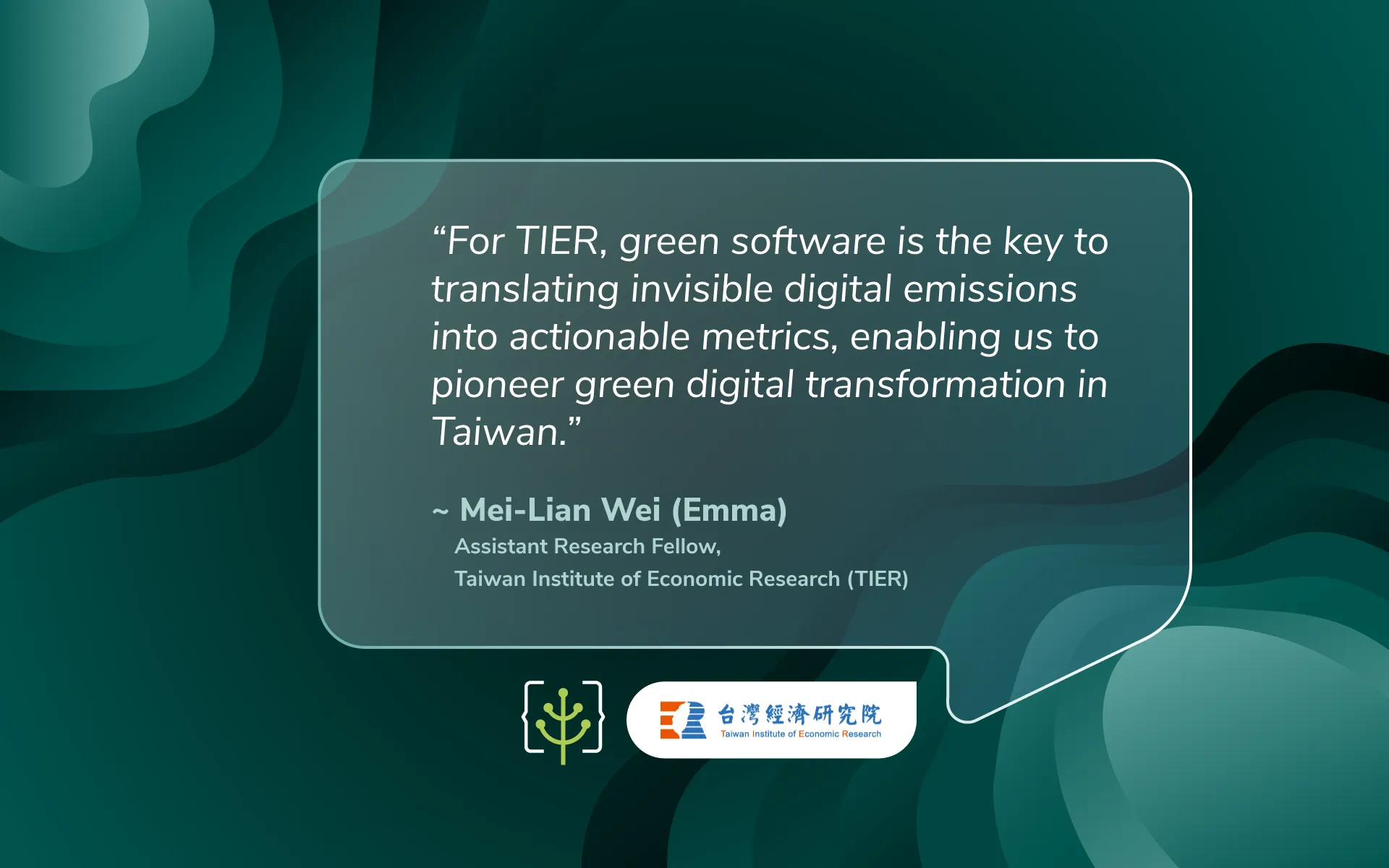
Quote from Mei-Lian Wei (Emma), Assistant Research Fellow at the Taiwan Institute of Economic Research (TIER): "For TIER, green software is the key to translating invisible digital emissions into actionable metrics, enabling us to pioneer green digital transformation in Taiwan." GSF and TIER logos shown below.

Turning Digital Emissions into Actionable Metrics—Meet Mei-Lian Wei of Taiwan Institute of Economic Research (TIER)

New GSF member, Mei-Lian Wei, shares how TIER brings frontline green software practices to Taiwan's digital industries, from SCI pilots to carbon calculation tools.
Read article →
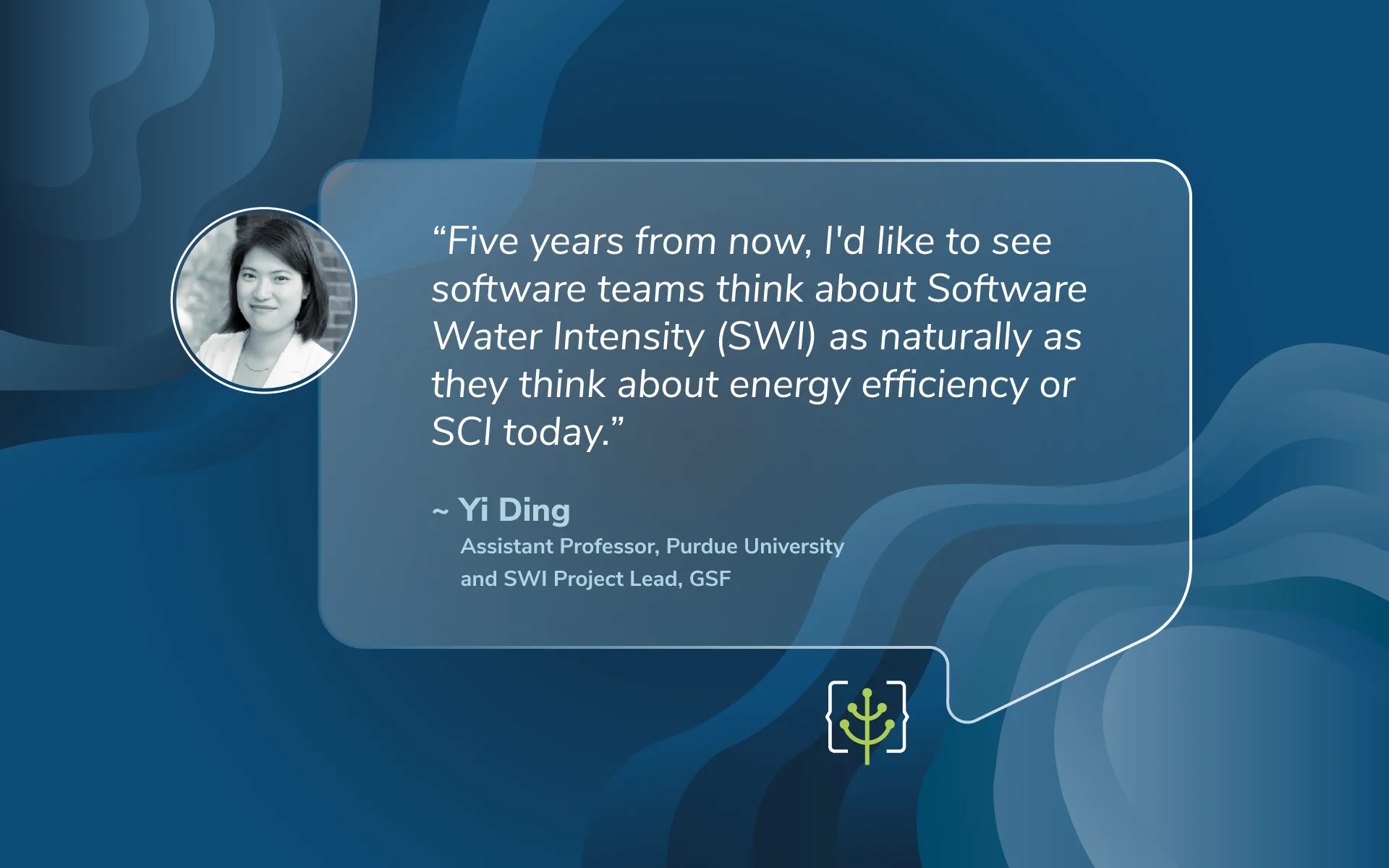
Quote card: Yi Ding, Assistant Professor at Purdue University and SWI Project Chair at GSF, says she'd like software teams to think about Software Water Intensity (SWI) as naturally as they think about energy efficiency or SCI five years from now.

Measuring Software's Water Footprint: A Conversation with SWI Project Chair Yi Ding

In our Q&A, Yi Ding shares how the SWI project is building a practical standard for measuring software's water footprint to support more informed engineering and business decisions.
Read article →
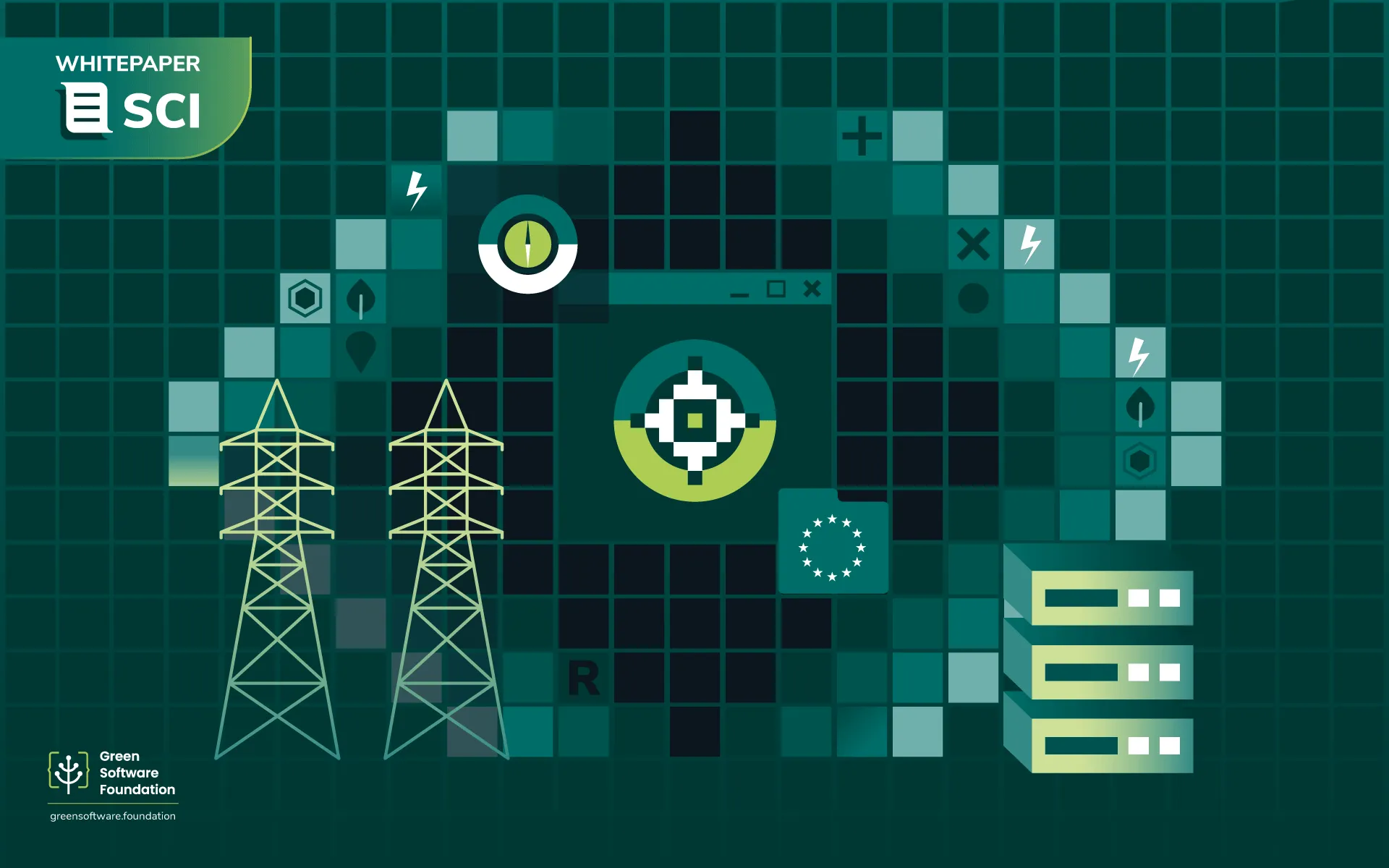
illustration in Green Software Foundation brand colors (dark teal grid background) featuring power transmission towers, stacked servers, an EU flag icon with stars, lightning bolt energy icons, a target/measurement icon, and a compass-like icon, symbolizing energy grids, data centers, and EU regulation tied to SCI (Software Carbon Intensity) measurement. The Green Software Foundation logo appears in the bottom left.

SCI for AI: A Framework for EU AI Act Environmental Compliance

In a recent whitepaper published by GSF's Software Standards Working Group, we map the ratified SCI for AI specification to the EU AI Act, showing how it helps fulfill the regulation's energy measurement requirements and goes further by converting energy into carbon emissions and accounting for embodied hardware emissions.
Read article →
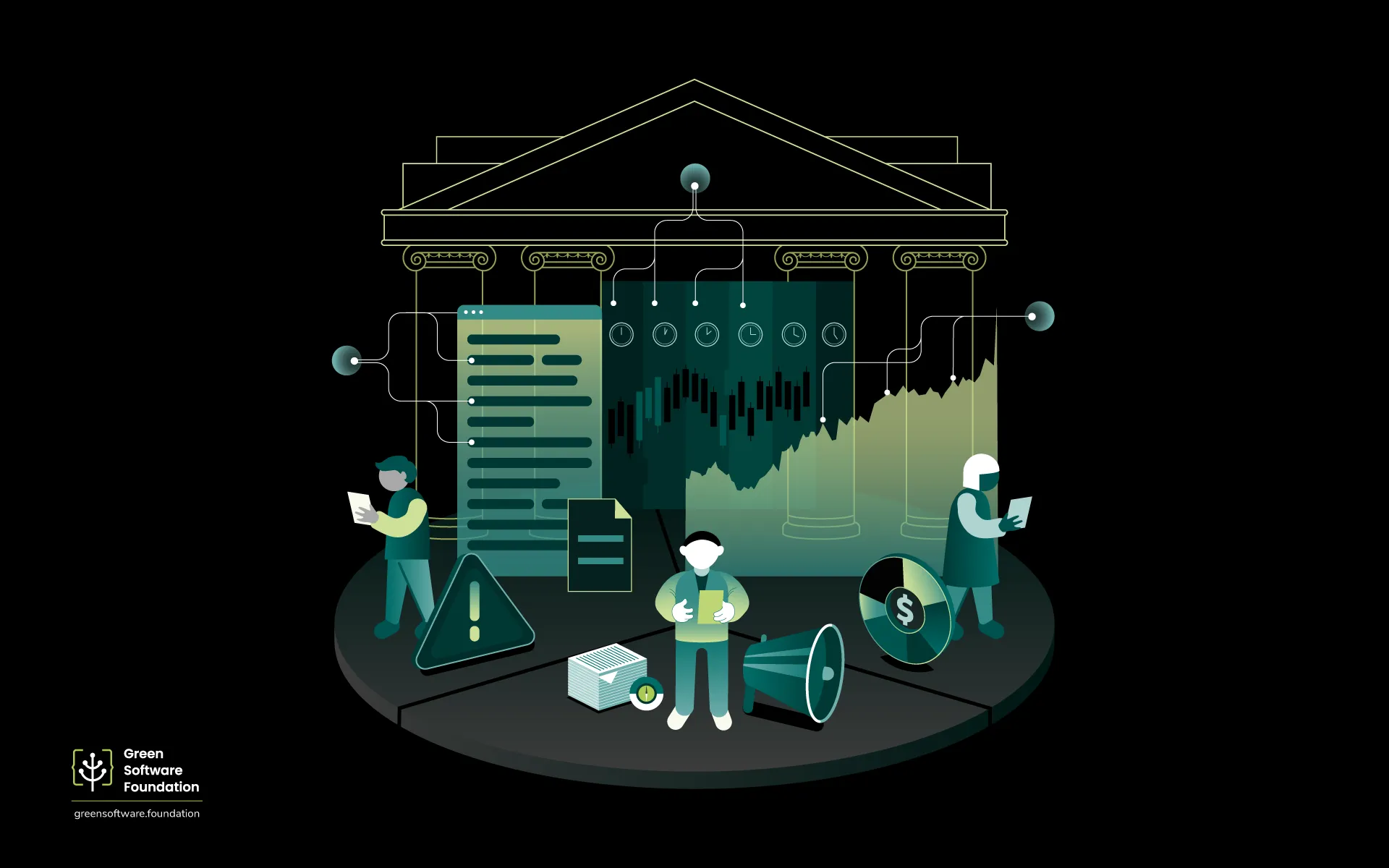
Illustration of a bank building with three figures standing in front, each connected to different data visuals — a document and text list, a candlestick stock chart with clocks, and a pie chart with a dollar sign — representing the three governance disciplines of model risk, disclosure, and cost.  Shorter version (if there's a character limit): Illustration of a bank with three figures linked to data visuals representing model risk, disclosure, and cost — the three governance disciplines discussed in the article.  Let me know if the CMS has a specific character cap and I'll tighten further.

Capital, Compute, and Carbon: Banking's Three Disciplines for Agentic AI

In our article, Navveen Balani, GSF Executive Director, examines how banking's existing governance disciplines extend to agentic AI and how they could benefit from shared measurement standards.
Read article →
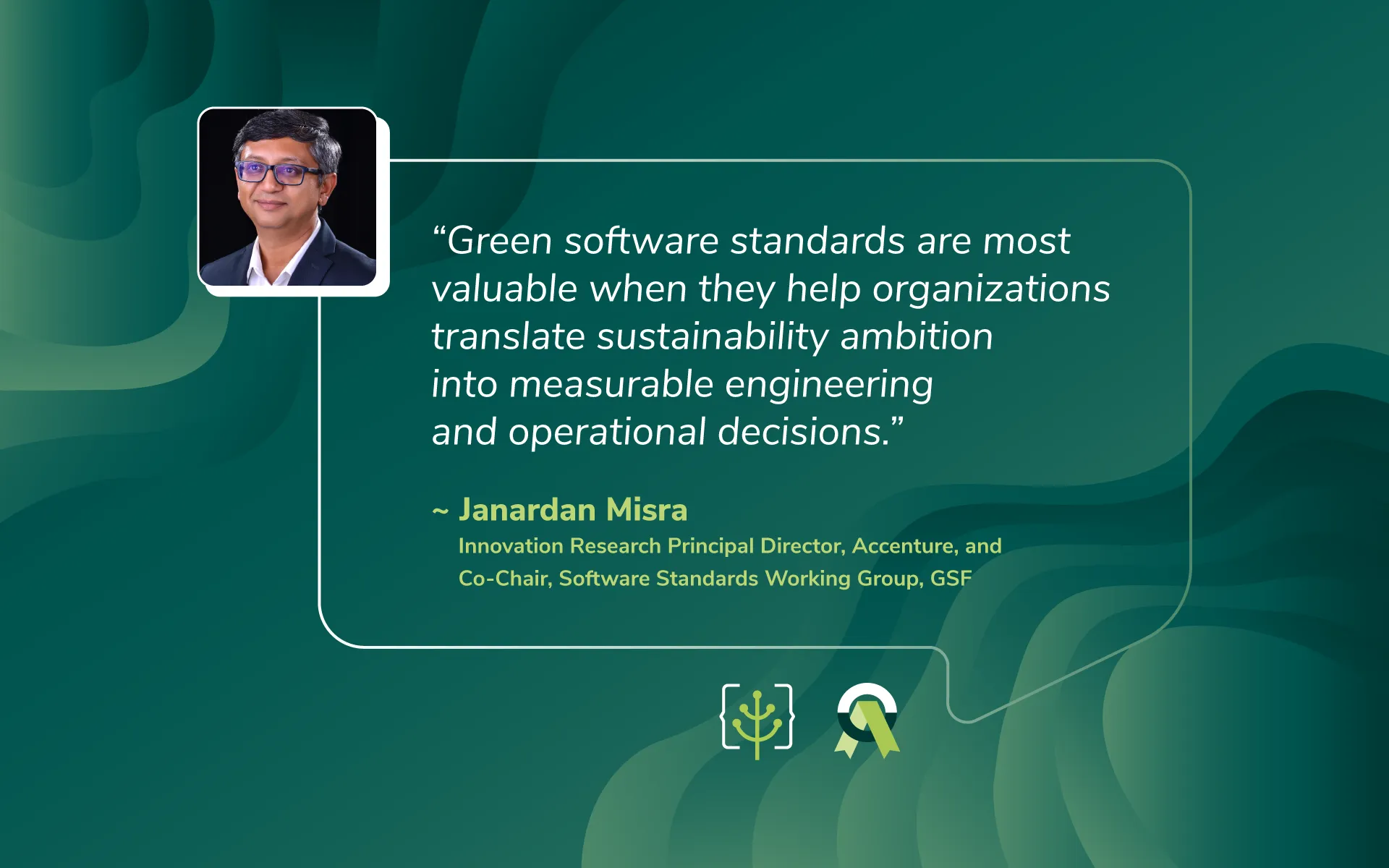
Quote card featuring a headshot of Janardan Misra, Innovation Research Principal Director at Accenture and Co-Chair of GSF's Software Standards Working Group. Quote reads: 'Green software standards are most valuable when they help organizations translate sustainability ambition into measurable engineering and operational decisions.' Dark green background with wave patterns, GSF and Software Standards Working Group logos at bottom.

Leadership Update: Janardan Misra elected Co-Chair of the Software Standards Working Group

In our latest Q&A, Janardan Misra (Accenture), new Co-Chair of the GSF's Software Standards Working Group and member of our Steering Committee, shares his plans and priorities in the new roles.

Read article →
Watersheds and Workloads: Bringing Water into the Sustainability Conversation

Watersheds and Workloads: Bringing Water into the Sustainability Conversation

Navveen Balani, GSF Executive Director, explores the unique challenges of water measurement and what they mean for decision-makers ahead of emerging disclosure requirements.

Read article →
Two illustrated frog characters represent 2021 and 2026, connected by a journey through green software milestones, with the Green Software Foundation logo at t…Two illustrated frog characters represent 2021 and 2026, connected by a journey through green software milestones, with the Green Software Foundation logo at the center.

The Green Software Foundation Turns Five!

As we celebrate the fifth anniversary, here's a closer look at the milestones that shaped the Foundation into a global consortium of nearly 70 organizations.

Read article →
Isometric illustration showing a data center stack at the center, with water flowing from its base into a dark blue pool below. Small figures interact with the infrastructure — one examining a document, another observing the environment. Trees and natural elements surround the scene, rendered in green tones. Green Software Foundation logo in the bottom left corner.

Introducing the Software Water Intensity (SWI) Project

Led by the Software Standards Working Group, the Software Water Intensity (SWI) project aims to develop a consistent way to measure and reduce software's water footprint.

Read article →

Every member's journey starts with a conversation

Tell us what you're trying to solve. We'll tell you how membership can help.